What BNG Actually Means

BNG is a planning requirement in England that ensures any new development leaves the natural environment in a measurably better state than before.
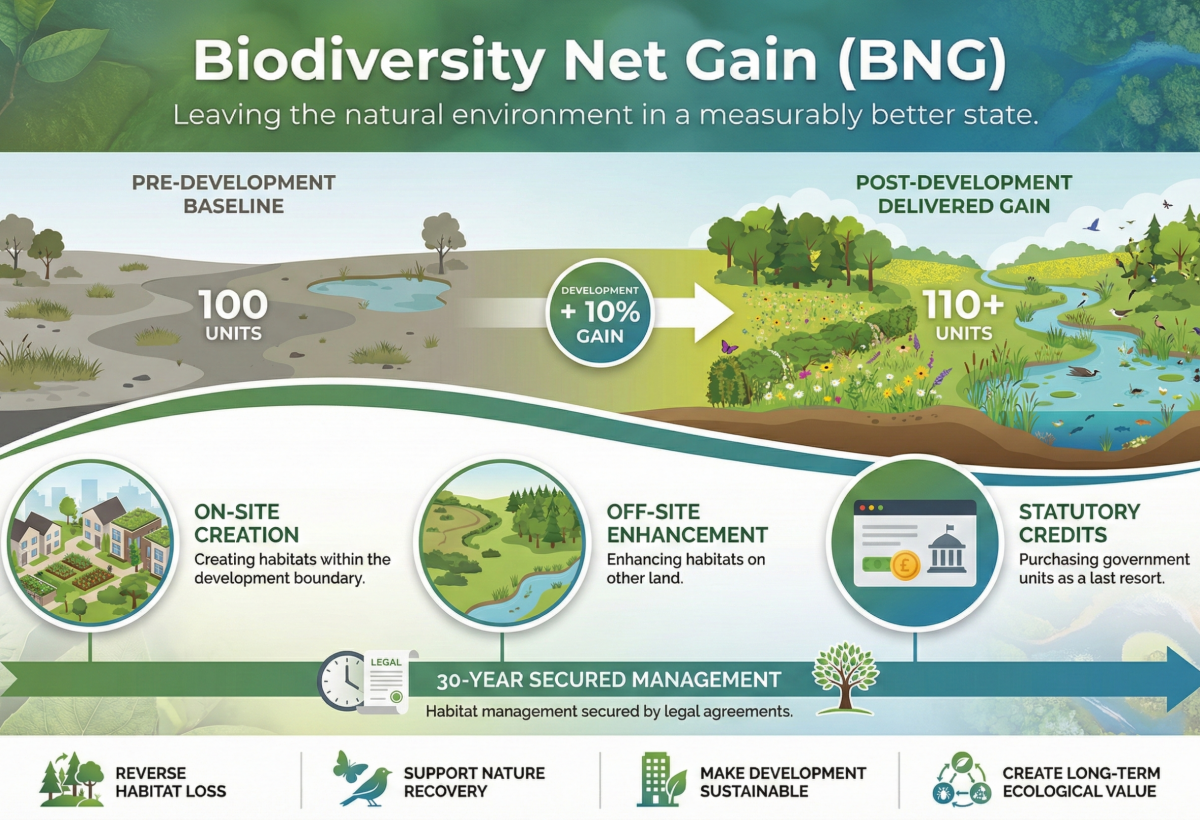
Developers must deliver at least a 10% increase in biodiversity value compared to the pre‑development baseline.  Through creating or enhancing habitats, either on-site, off-site, or via purchasing credits as a last resort, with habitat management secured for at least 30 years. Mandated by England’s Environment Act 2021, BNG aims to reverse nature loss by creating “bigger, better, more joined-up” habitats, contributing to a resilient ecological network

This isn’t about protecting individual species — it’s about improving habitats (grassland, woodland, hedgerows, ponds, etc.) so wildlife has more and better places to thrive.
Why BNG Matters

BNG is designed to:

  • Reverse habitat loss
  • Support nature recovery
  • Make development more sustainable
  • Create long-term ecological value

It’s one of the biggest shifts in UK planning policy in decades.

How Biodiversity Is Measured

BNG uses a standardised system called the statutory biodiversity metric (created by Defra and Natural England).

The metric converts habitat features into biodiversity units, based on:

  • Habitat type
  • Habitat size
  • Habitat quality/condition
  • Habitat location relative to local priorities

An ecologist assesses the site before and after development to calculate the change in units.

Key Aspects of BNG:

  • Mandatory 10% Gain: Developers must deliver a 10% net gain in biodiversity value for most developments in England.
  • Measurable Improvement: A biodiversity metric is used to quantify pre-development biodiversity and prove the post-development gain

.

  • Delivery Methods:
    • On-site: Creating or improving habitats within the development boundary.
    • Off-site: Creating or enhancing habitats on other land (developer-owned or third-party).
    • Statutory Credits: Purchasing units from a government scheme as a last resort when local options are exhausted.
  • Long-Term Security: Created or enhanced habitats must be managed and maintained for a minimum of 30 years, secured by legal agreements.
  • Implementation: Became mandatory for major developments in February 2024 and small sites in April 2024, with National Significant Infrastructure Projects (NSIPs) following in May 2026.